
PFAS-Free Materials in Blown Film Production: What You Need to Know Now!
Regulatory Pressure Is Increasing Worldwide
Regulation is one of the key drivers behind the shift to PFAS-free materials. Globally, important PFAS subgroups are already listed under the Stockholm Convention for restriction or elimination. In the European Union, the Packaging and Packaging Waste Regulation (PPWR) will ban PFAS in food packaging above defined limits from August 12, 2026. In parallel, a comprehensive restriction proposal submitted to the European Chemicals Agency could lead to a broad ban on the manufacture, sale, and use of PFAS as early as 2026.
Similar developments can be seen worldwide. In the United States, certain PFAS have been banned from food packaging since February 2024, and several states have already prohibited their intentional use in consumer products. Canada introduced PFAS regulations for food packaging at the beginning of 2025, while in China specific substances such as PFOA and PFOS are subject to restrictions.
Industry is also responding proactively. Companies like 3M decided to end PFAS production by the end of 2025, and leading global food brands – including McDonald’s, Burger King, and Starbucks – have publicly committed to eliminating PFAS from their food packaging.
PFAS-Free Alternatives: Where the Industry Stands Today
In response to growing pressure, raw material manufacturers have begun offering PFAS-free alternatives. However, the transition is far from straightforward. Many PFAS-free materials are still under development, and their behavior during processing differs significantly from that of PFAS-containing formulations. Handling, process stability, and final product properties can change, requiring a deeper understanding of material interactions.
In addition, PFAS-free PPAs are chemically different from traditional solutions. This makes their interaction with other additives less predictable and limits experience with long-term material behavior in industrial applications. For film producers, this means adapting recipes, processes, and sometimes even hardware to maintain consistent quality and productivity.
What Are PFAS and Why Are They Under Scrutiny?
PFAS are a group of synthetic chemicals that have been widely used for decades due to their exceptional material properties. Their resistance to heat, chemicals, and friction makes them highly effective in many industrial applications. In blown film extrusion, PFAS are commonly found in raw materials and polymer processing aids (PPAs), where they help increase output, improve surface quality, reduce gel formation, and prevent melt fracture or plate-out.
At the same time, these substances are extremely persistent. PFAS do not degrade easily in the environment, can accumulate in living organisms, and are associated with potential health risks. As a result, PFAS are now regarded as a global environmental concern. Many companies – especially major food and consumer brands – have to reduce or completely eliminate PFAS from their products and packaging.
In practice, PFAS-free materials often cause:
1
Shorter Uptime and More Frequent Cleaning Cycles
2
Increased Contamination on Screen Changers
3
Additional Effort for Recipe Development and Process Optimization
How Reifenhäuser Blown Film Supports the Transition
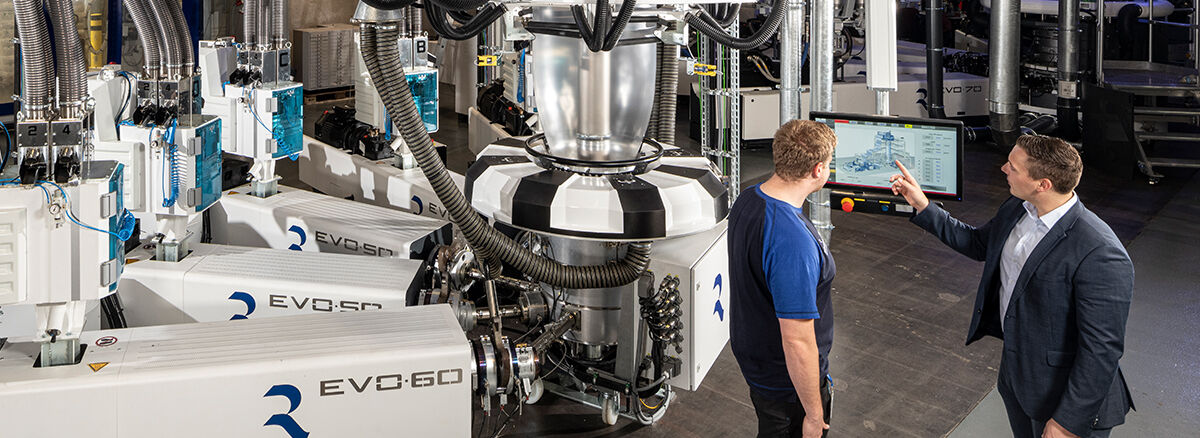
Reifenhäuser Blown Film supports customers throughout the transition to PFAS-free production with a holistic approach that combines technology, services, and application know-how.
- Raw Material Know-how: New material recipes are developed and tested in the Reifenhäuser Technical Center to ensure reliable processing and high product quality under real production conditions.
- Digitalization: Solutions such as the Reifenhäuser ReStart Assistant speed up potentially more frequent cleaning intervals due to PFAS-free materials. The solution helps minimizing downtime and scrap by significantly reducing start-up time by up to 45 percent compared to manual operation.
- Service: In addition, Reifenhäuser offers professional die cleaning services in Europe, enabling customers to maintain efficient and stable production even when processing more demanding materials.
- Hardware Innovations: The brand-new generation of Reifenhäuser Ultra Die heads are specifically designed for easy cleaning and maintenance. Their reduced retention times lower thermal stress on the melt, helping to minimize deposits and improve overall process stability. At the same time, ongoing research and development focus on reducing plate-out, improving surface finish, and preventing melt fracture when processing PFAS-free materials.